

The most crucial moment in the psychology of travel photography isn’t when we click the shutter, it’s the moment before.
Mindful photography offers a unique opportunity for Mental Decentralization. Most of the time, our minds are stuck in ego-centric loops (How do I look? What did that person say?). When we encounter a magnificent moment, we are forced out of our ego. We become centered on the external world.
The photograph, if taken with intent, becomes a physical token of that rare, decentralized moment. It is a snapshot of our own temporary selflessness.
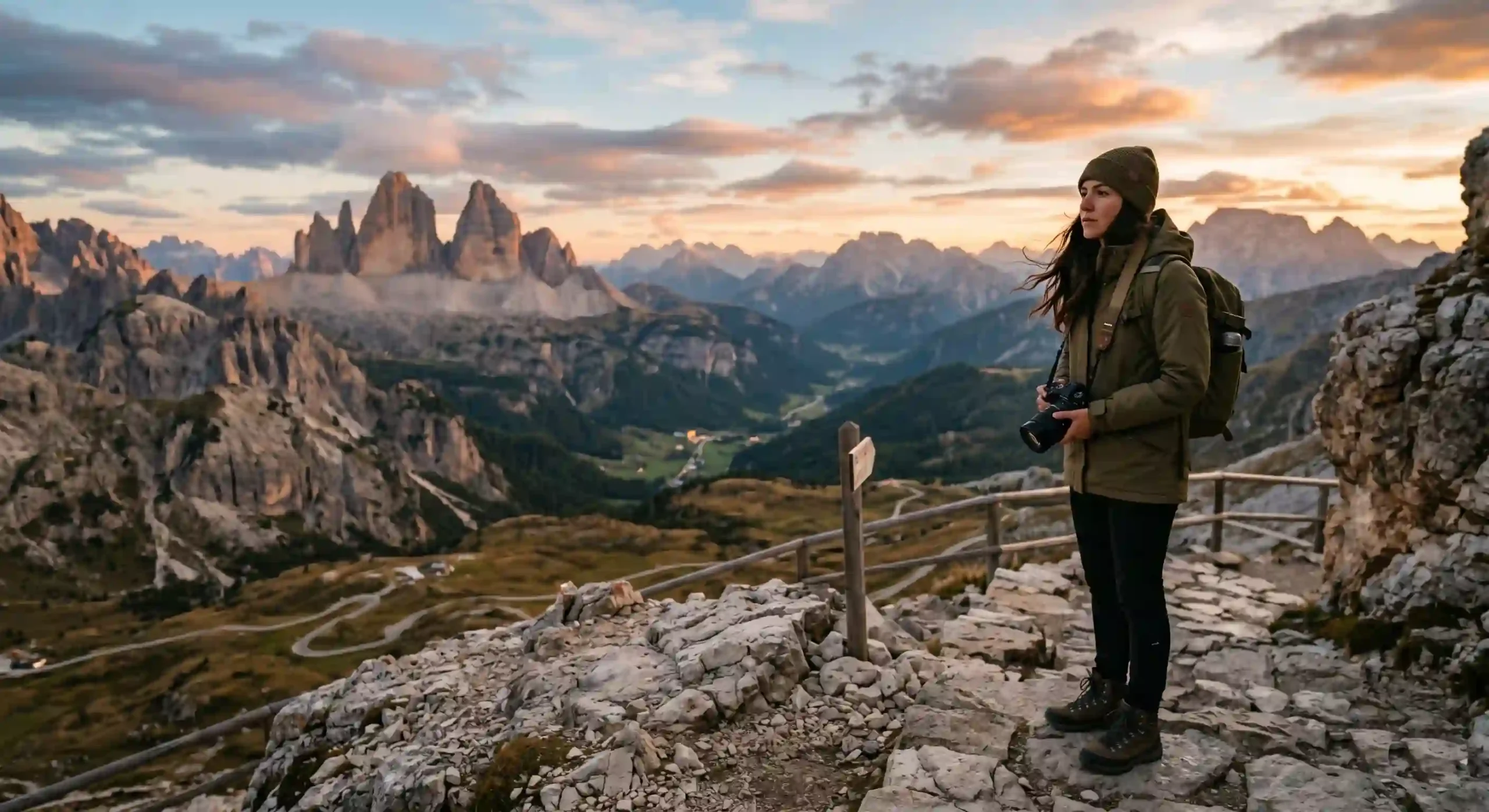
When you look back at your travel photos months later, you shouldn’t just see the mountain or the market. A successful, psychologically resonant photograph is one that transports you back to that specific moment of awe, curiosity, or solitary connection. It doesn’t just show you what you saw, it reminds you of who you were.
Have you ever stopped to wonder why, the moment we step off a plane or reach a breathtaking viewpoint, our first instinct is to reach for a camera?
The search for the “psychology of travel photography” has surged globally, and for good reason. Are we capturing memories, or are we distancing ourselves from the present moment?
Let’s dive into the fascinating psychological mechanics behind why we take travel photos, how it affects our memories, and what our chosen subjects reveal about our inner world. The Psychology of Travel Photography.
The Memory Anchor: Why We Document
Travel photography is driven by the human desire to hold onto fleeting moments. Psychologically, we use cameras as “memory anchors.” When we encounter environments like a bustling market, a serene coastline, or unfamiliar architecture, our brains are flooded with new sensory stimuli.
Taking a photograph is a way of saying, “This matters. I don’t want to forget this.” By framing a shot, we actively signal our brain to encode the information. Interestingly, psychological studies suggest that the act of taking photos can actually enhance our visual memory of a scene, even if it might slightly impair our auditory memory of the exact event.
The Observer Effect: Presence vs. Documentation
One of the most debated topics in the psychology of travel photography is the “Observer Effect.” Does the camera connect you to the moment, or act as a barrier?
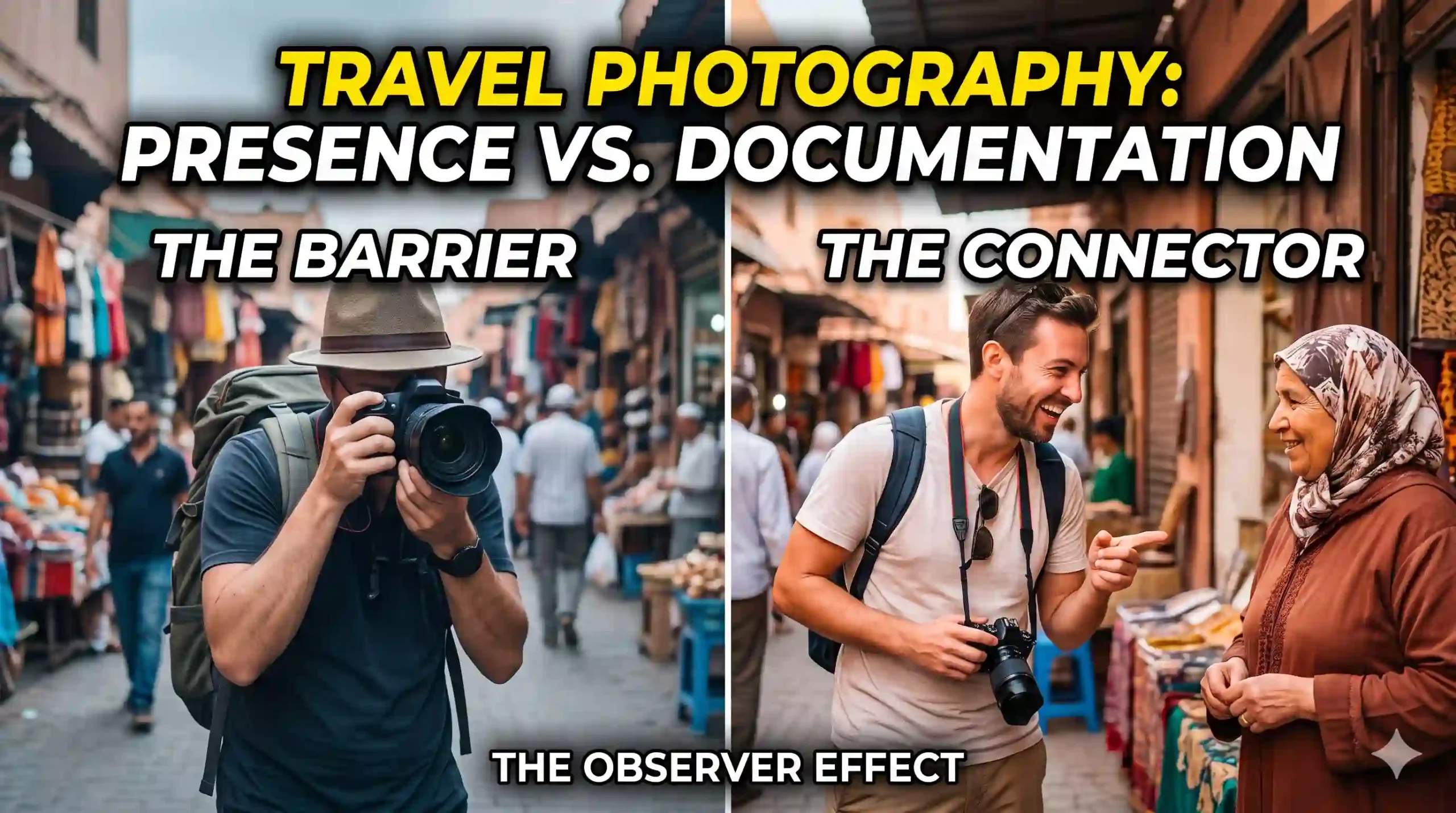
The Barrier
Sometimes, the obsession with getting the perfect shot creates a psychological distance. We become directors rather than participants, more concerned with lighting and angles than the sensory, lived experience of the location.
The Connector
On the other hand, mindful photography can drastically heighten awareness. When you are looking for interesting patterns, shadows, or candid human interactions, you become deeply attuned to your surroundings. You start noticing profound details that a passive tourist might entirely overlook.
The Solo Traveler’s Silent Companion
The psychological impact of photography shifts dramatically depending on who we are traveling with, or if we are traveling solo. Riding solo through the high-altitude deserts of Leh, Ladakh, or Spiti Valley on a maxi scooter is an isolating experience. In these mountains, the camera is often your only companion. Photography here is not about proving your trip to anyone else. Instead, it is a tool for looking inward. Capturing the massive scale of the Himalayas helps you process the environment and manage the isolation of navigating it alone. The lens becomes a simple bridge between you and the vast world around you.
Identity and the Social Media
In the digital age, we cannot discuss the psychology of travel photography without acknowledging social media. Platforms have introduced a “performative” element to our travel memories.
We often photograph not just what we see, but how we want to be seen. The psychological drive here is tied to social identity theory. By curating images of our travels, we are communicating our values, our adventurous spirit, and our cultural capital to our broader social circle. The challenge for modern travelers is finding a healthy balance between capturing an authentic moment and staging a photo purely for external validation.
Keep in Mind
The 5 Min. Rule
When you arrive at a stunning location, wait exactly five minutes before taking your camera out. Experience the scale, the smell, and the sounds with your own senses first.
Shoot for Story, Not Just Beauty
Focus on capturing the feeling of a place. A slightly blurred photo of a laughing street vendor often holds far more emotional resonance than a perfectly crisp, sterile landscape.
Embrace the Imperfect
Let go of the need for the “perfect” shot. The true psychological value of a photo lies in its ability to transport you back to a feeling, not in its technical perfection.
The psychology of travel photography tells us that the pressure to capture an “iconic” shot often triggers the Observer Effect, detaching us from the moment. To reset your creative brain, try pointing your lens at the everyday. Planning a trip to one of these best places of Small Town America is a brilliant way to practice mindful photography.
Conclusion
The psychology of travel photography reveals that our cameras are much more than just tools; they are extensions of our memory, our identity, and our way of interacting with the unknown. The next time you find yourself framing a beautiful vista or a quiet street corner, take a second to ask yourself why. The answer might just change the way you experience travel forever.